A sales content management platform centralizes sales-approved content in a single source of truth, making it easier for revenue teams to find, share, and track the materials that move deals forward. In a landscape where more than half of sales leaders report using sales enablement content, and 79% say those materials are essential for closing, choosing the right platform has become a strategic decision, not just an operational one.
Yet the gap between having usable content and having just content remains wide. Choosing the right platform has become a strategic decision in a landscape where more than half of sales leaders report using sales enablement content and 79% say those materials are essential for closing.
These are symptoms of scattered storage, poor version control, and a lack of connection between content engagement and pipeline outcomes.
This guide explains what a sales content management platform does, which features matter most for growing teams, and how the top platforms in 2026 compare on content governance, analytics, CRM integration, and AI-powered findability.
Table of Contents
What is a sales content management platform?
A sales content management platform is software that organizes, distributes, governs, and tracks sales-facing content across an organization. Unlike a general-purpose CMS designed for website publishing or a digital asset management (DAM) tool built for brand media, a sales content management system is purpose-built for revenue teams. It enforces content governance through approvals, versioning, and expirations, while supporting role- and region-based access controls, ensuring that sellers always work with current, compliant materials.
At a functional level, a sales content management platform delivers recommended content based on deal stage and buyer context, then integrates with CRM systems to link content usage to opportunities. This CRM-native reporting connects content engagement signals to pipeline stages and outcomes. That visibility shows enablement leaders which assets actually influence revenue, instead of just which ones get downloaded.
The content lifecycle governance built into these platforms typically includes the following steps:
- Create
- Review
- Approve
- Publish
- Update
- Expire
- Archive
Governance roles include content owners, approvers, compliance reviewers, and enablement admins, each responsible for different phases of that lifecycle. Without this structure, content libraries become what many salespeople are used to encountering: graveyards of outdated decks and orphaned one-pagers that erode seller confidence and buyer trust.
Why Sales Teams Need a Sales CMS
Sales content management platforms solve three problems that spreadsheets, shared drives, and general-purpose storage tools cannot: findability, governance, and attribution. When content is scattered across Google Drive folders and email attachments, sellers default to whatever they can find fastest, which is rarely the most current or effective asset.
The data makes the case clearly. Sales enablement strategies that include structured content management contribute to 49% higher win rates on forecasted deals, according to multiple industry benchmarks. And yet only 35% of sales teams currently track their content’s effectiveness. That gap is one that a dedicated platform is specifically designed to close.
Beyond findability, a sales CMS protects brand consistency. In regulated industries like healthcare, financial services, and legal, sending outdated compliance materials or unapproved pricing documents creates liability. Even in less regulated environments, off-brand content damages credibility and introduces confusion during multi-stakeholder buying cycles.
My take: I’ve worked with sales organizations that had thousands of assets but no adoption. The content existed, but sellers couldn’t find it when it mattered. At BC Solutions, consolidating scattered collateral from Google Drive anarchy into a single governed library was the first operational change that meaningfully shortened our average sales cycle, because suddenly we always had what we needed (case studies, reference letters, or project estimates) to move each Yardi implementation deal forward.
What to Look for in Sales Content Management Software
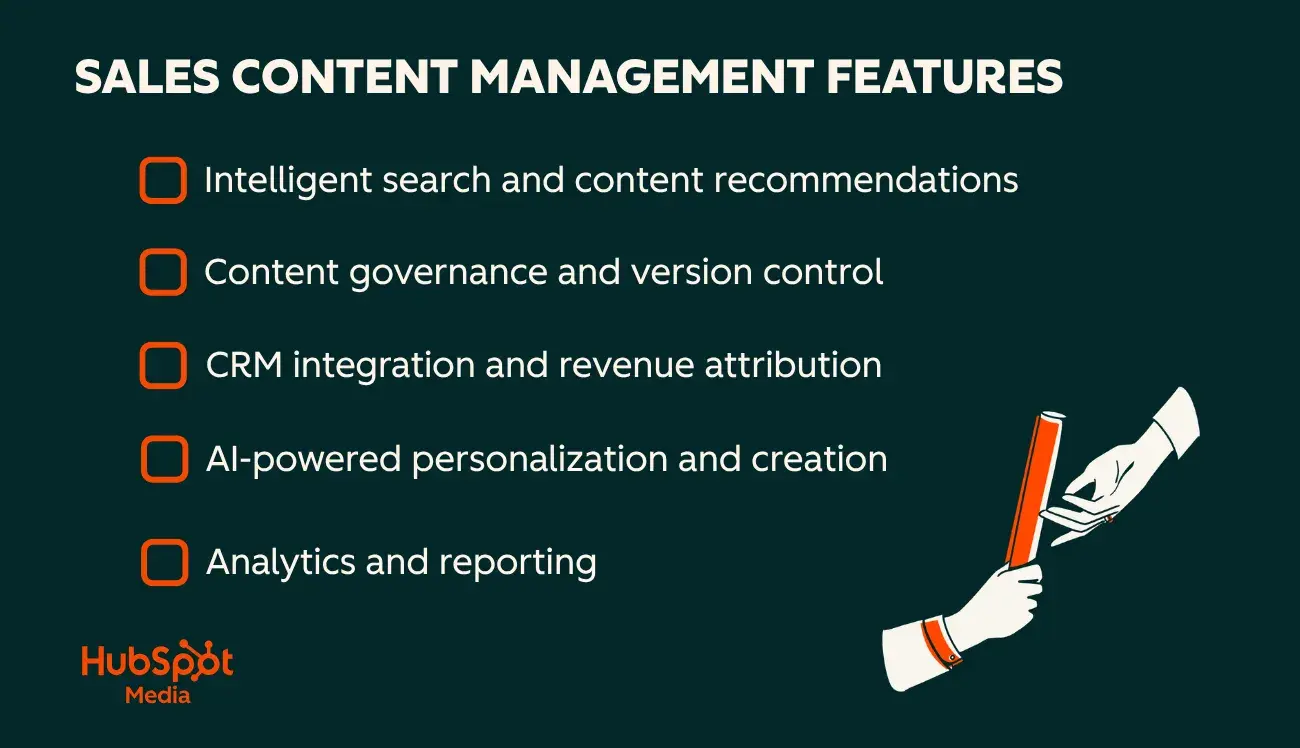
Sales enablement leaders evaluating content management platforms should prioritize capabilities that directly improve seller adoption, content quality, and revenue attribution. The five features below represent the highest-impact differentiators between platforms that warehouse content and platforms that activate it.
1. Intelligent Search and Content Recommendations
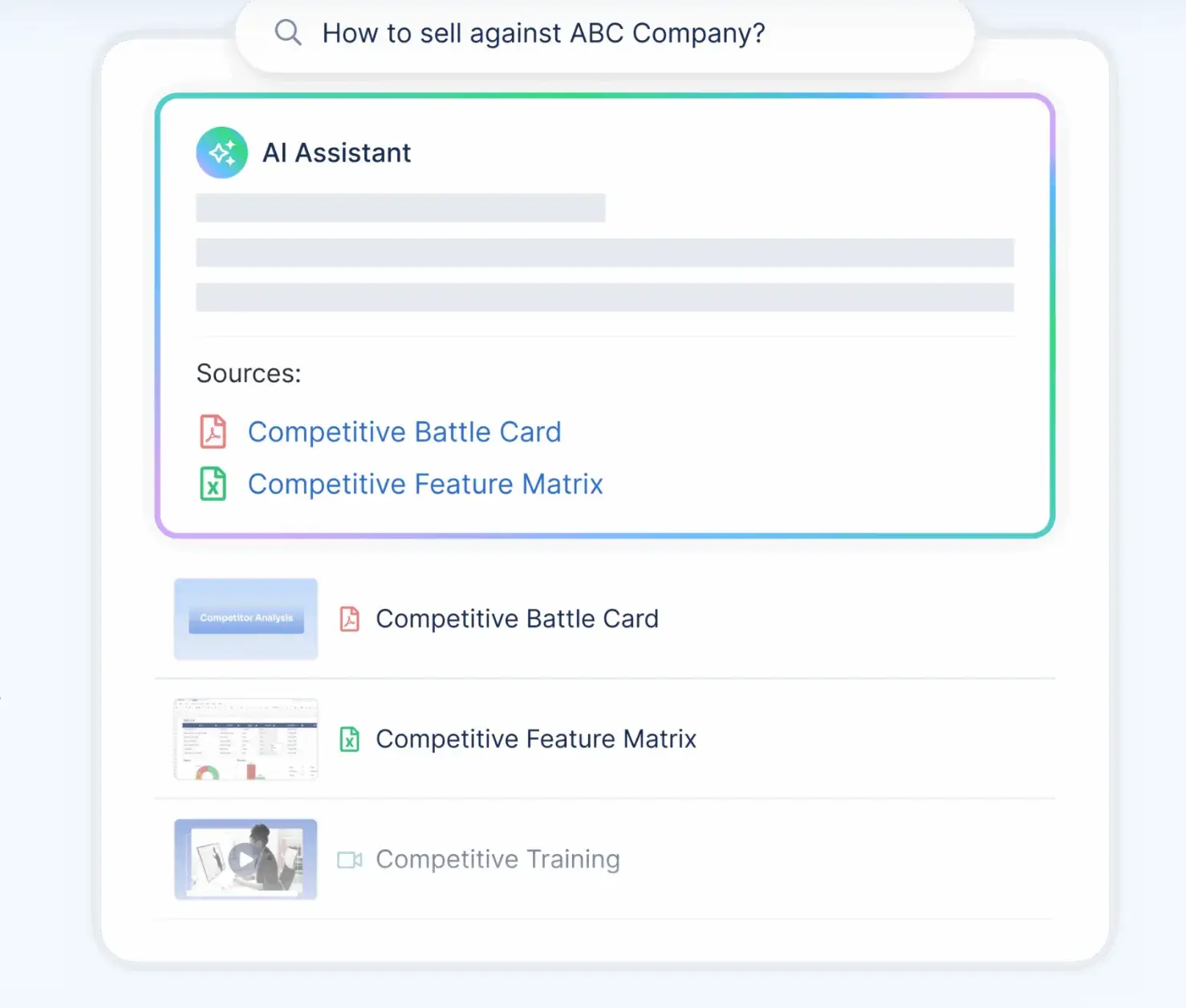
A sales content management platform improves content findability by using AI-powered search, contextual tagging, and deal-stage recommendations to surface relevant materials without manual browsing. Intelligent search eliminates the hunt, where sellers sift through folders hoping to find the right deck, and replaces it with instant, context-aware results. The best systems learn from usage patterns and engagement data, automatically promoting high-performing assets.
Sales content analytics should measure rep adoption and asset usage by team and stage, so enablement leaders can see not just what’s being used but what’s being used successfully.
Pro tip: Look for platforms that recommend content within the CRM or email workflow, not just inside the content library. If sellers have to leave their deal workspace to find content, adoption will always be lower than it could be. Even small amounts of friction add up.
2. Content Governance and Version Control
Content governance determines whether the library stays useful over time or degrades into clutter. A strong platform enforces approval workflows, automatic expiration dates, and version tracking so that every asset in the system is current, compliant, and owned by a named stakeholder. Without governance, content libraries grow unchecked with [Pitch-Deck_v5-FINAL-use_this_one], and outdated materials end up in front of buyers.
Role-based permissions ensure that only approved users can publish, edit, or retire content. Region-based access controls further segment the library for global teams operating under different compliance requirements or product lines.
Best for: Organizations with multiple product lines, regional teams, or compliance requirements that demand strict control over what sellers can share externally.
3. CRM Integration and Revenue Attribution
A sales content management platform integrates with CRM systems to link content usage to opportunities, giving revenue leaders a clear line from asset engagement to deal outcomes. This capability is what separates a content library from a revenue intelligence tool. When a rep shares a case study during a mid-stage opportunity, and the buyer spends eight minutes with it before the deal closes, CRM-native reporting connects that engagement signal to the pipeline stage and outcome.
Without this integration, enablement teams can’t prove ROI, which remains one of the most persistent challenges in sales management. Platforms that log content activity directly into deal records provide the attribution data needed to justify content investment and guide future production.
What we like: Platforms where content engagement data appears on the deal timeline inside the CRM, not buried in a separate analytics dashboard that managers have to remember to check.
4. AI-Powered Personalization and Creation
AI has moved beyond search and recommendation into content creation and personalization. According to the Content Marketing Institute’s 2026 B2B research, 45% of B2B marketers plan to increase their investment in AI-powered marketing tools in 2026.
The most capable platforms in 2026 use AI to generate first drafts of sales emails, customize pitch decks with prospect-specific data, and dynamically assemble content packages based on buyer persona and deal stage. This capability reduces the time sellers spend adapting generic materials and increases the relevance of every touchpoint.
Pro tip: Evaluate whether AI features work inside the CRM and email client, not just inside the content platform. AI that generates a perfect email draft is only useful if the rep can access it during the actual workflow.
5. Analytics and Reporting
Sales content analytics measures rep adoption and asset usage by team and stage, giving enablement leaders the data to optimize their content library rather than just expanding it. Strong analytics answer questions like:
- Which assets are sellers actually using?
- Which content correlates with closed-won deals?
- Where in the funnel do buyers disengage?
The most effective reporting connects content engagement to downstream pipeline outcomes. This goes beyond download counts and open rates into territories like influence on deal velocity, stage progression, and revenue attribution. Platforms that surface these insights through built-in dashboards (rather than requiring custom report building) get higher adoption from managers and executives.
My take: I’ve seen plenty of content platforms that report impressively on vanity metrics like views, downloads, and shares without answering the only question that matters: did this content help close a deal? Insist on pipeline-connected reporting before you sign.
Best Sales Content Management Platforms Compared
The platforms below represent the strongest options for sales enablement leaders in 2026, evaluated on content governance, CRM integration, AI capabilities, analytics depth, and ease of adoption.
As is true with all software-focused spaces at the moment, the sales enablement market is changing fast. Seismic and Highspot announced a merger in February 2026, and Showpad merged with Bigtincan under Vector Capital in late 2025. Buyers should evaluate current capabilities carefully and ask about product roadmaps.
1. HubSpot Content Hub + Sales Hub + Smart CRM

HubSpot provides the most integrated approach to sales content management because content creation, distribution, tracking, and CRM reporting all run on the same platform. There is no sync layer between the content system and the CRM. They share a single data model.
Content Hub gives marketing and enablement teams a drag-and-drop content creation environment with AI-powered writing assistance built in. Teams can create, manage, and distribute blog posts, landing pages, knowledge base articles, and gated assets from one workspace. Content Hub handles the creation and publication side of the content lifecycle, while Sales Hub handles distribution, tracking, and performance analytics from the seller’s perspective.
Sales Hub equips sellers to personalize outreach using CRM data, track email engagement in real time, and automate multi-channel sequences across email and phone. When a rep shares content through a Sales Hub sequence, every action is automatically logged to the contact and deal record in Smart CRM, creating the attribution chain that connects content engagement to pipeline outcomes.
Breeze, HubSpot’s AI system, works across all Hubs and the CRM. Breeze’s AI agents can automate work like drafting content, researching prospects, and enriching CRM data. The AI prospecting agent helps sales teams identify, research, and engage leads, tying AI-generated outreach directly to CRM-tracked content performance.
Because HubSpot serves as both the content system and the CRM, CMS-CRM integration is native rather than bolted on. This eliminates the sync latency and data discrepancies that plague teams running separate content and CRM platforms.
Key Features
• Unified content creation, distribution, and CRM reporting on a single platform
• Breeze for AI content drafting, prospecting, and data enrichment
• Real-time email tracking with automatic CRM logging
• Free CRM edition with scalable paid plans
• Extensive sales automation tools that connect content usage to deal progression
Pricing: Free CRM available. Content Hub Starter begins at $20/month per seat. Sales Hub Starter begins at $20/month per seat. Professional and Enterprise editions unlock advanced automation, AI features, and custom reporting.
What we like: HubSpot is the only platform on this list where content creation, seller workflows, and deal analytics share a single database. That native connection means attribution is real, not inferred from data synced between two separate systems.
Best for: Overall CRM-native content management
2. Seismic
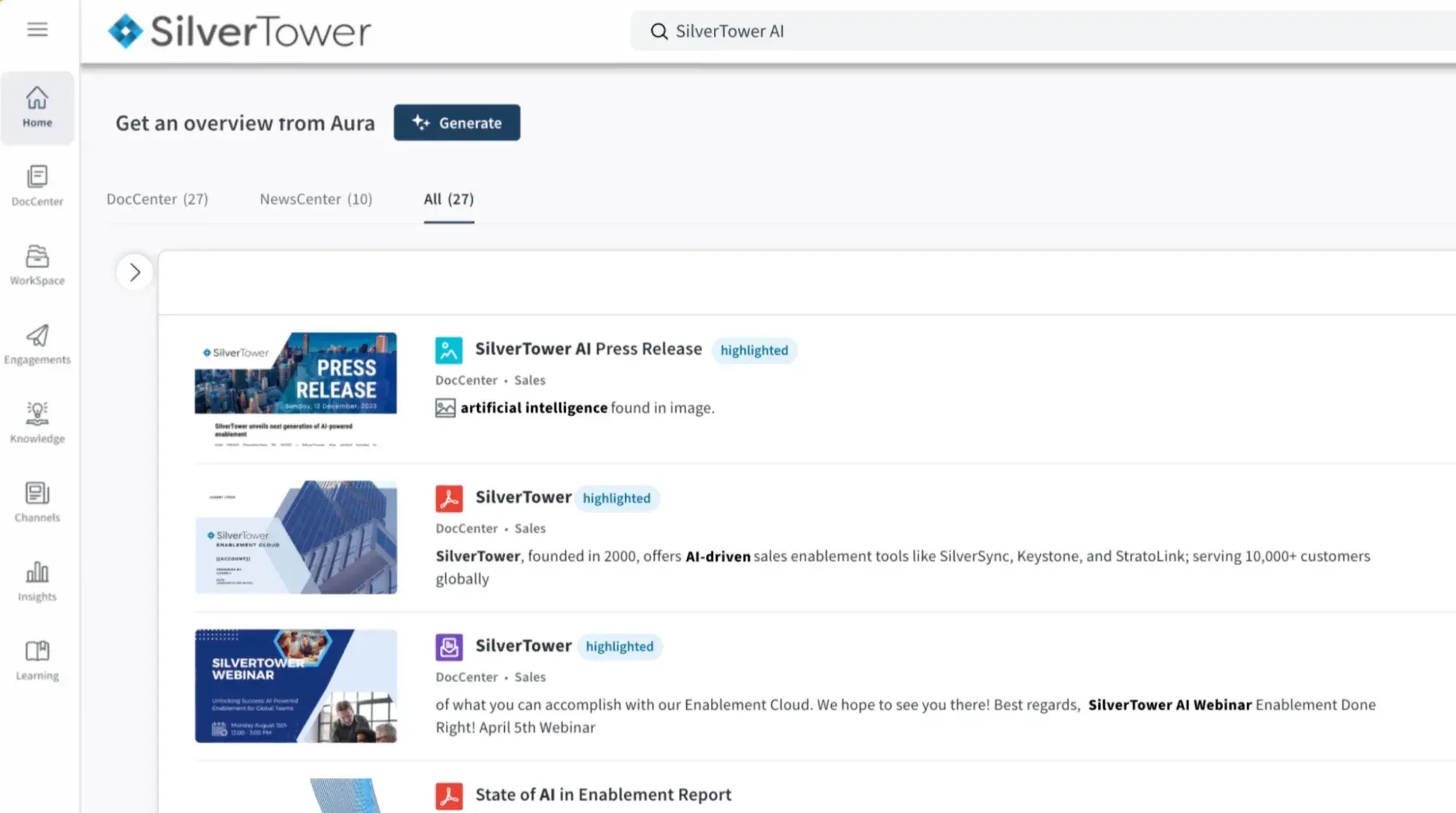
Source
Seismic is the category leader in enterprise sales enablement, and in February 2026, the company announced a merger with Highspot that will create the largest dedicated enablement platform in the market. Seismic’s core strength is content automation and governance for large, complex organizations managing thousands of assets across multiple business units, regions, and compliance frameworks.
Seismic’s LiveDocs feature dynamically assembles personalized content using CRM data, reducing manual customization and ensuring brand consistency. Its Aura AI engine powers content recommendations, search, and analytics. The platform integrates with Salesforce, HubSpot, and Microsoft Dynamics.
Key Features
- Dynamic content assembly
- Advanced governance and version control
- Hierarchical tagging
- Robust analytics
- Training/coaching modules
Pricing: Custom enterprise pricing. Implementation timelines can run several months for large deployments.
What I like: Seismic’s content automation capabilities are genuinely best-in-class for enterprises that need to generate personalized collateral at scale. The reporting depth is strong, particularly for organizations that need to demonstrate enablement ROI to executive leadership.
Best for: Enterprise content governance at scale
Consideration: The Highspot merger is pending regulatory approval. Buyers should evaluate the current platform and ask about the product integration roadmap before committing to long-term contracts.
3. Highspot
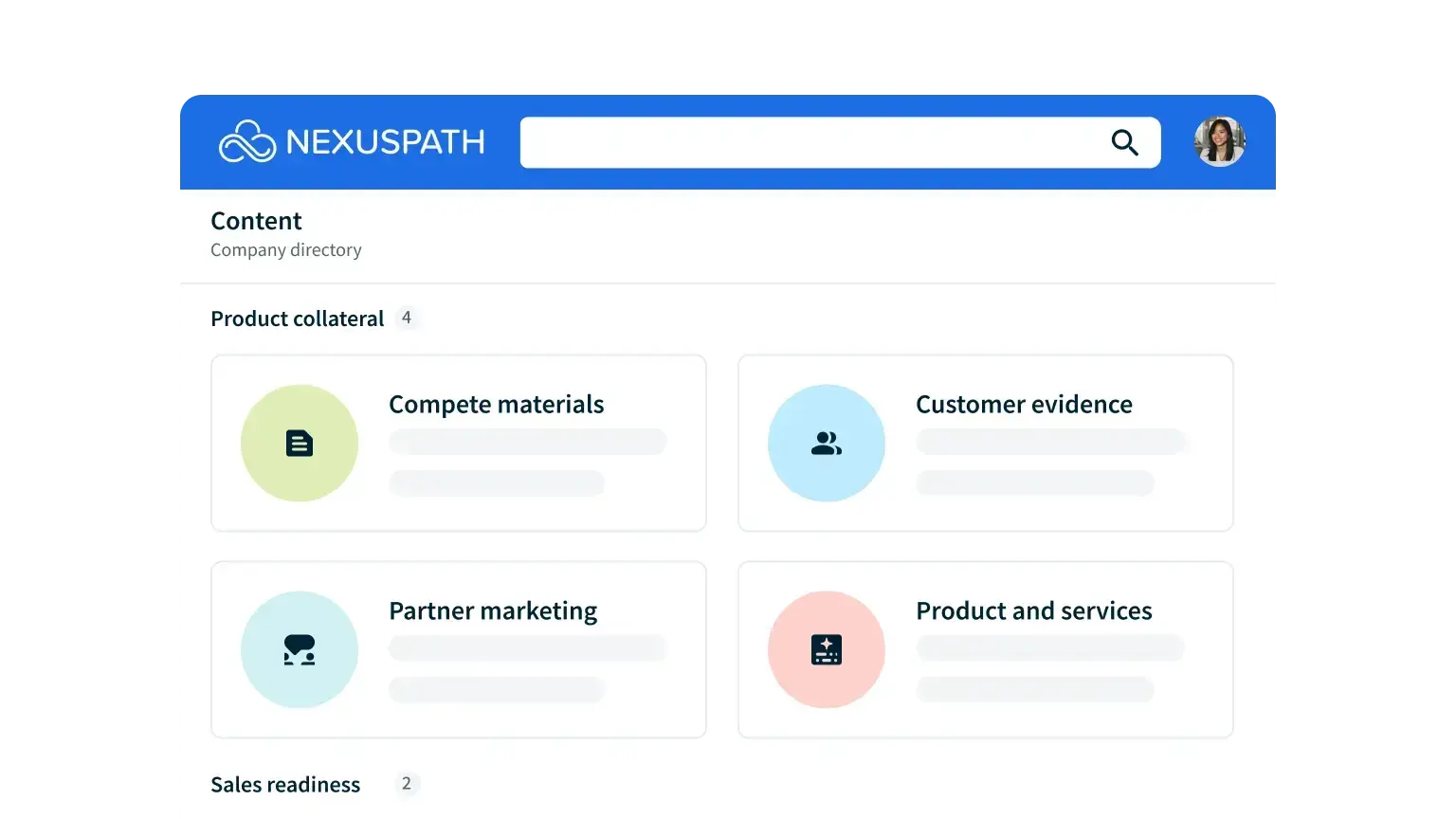
Source
Highspot was recognized as the only Customers’ Choice in Gartner’s 2025 Peer Insights for Revenue Enablement Platforms. The platform is known for high adoption rates driven by an intuitive, seller-first interface. Its AI-powered search uses natural language processing so reps can describe what they need rather than navigating folder structures. Content is organized into “Spots,” curated collections by topic, persona, or deal stage that make browsing fast, even for new sellers.
Key Features
- AI-powered search
- Content scoring by engagement data
- Coaching and training modules
- Salesforce and HubSpot integrations
- In-context sales guidance
Pricing: Custom enterprise pricing.
What I like: Highspot’s onboarding speed sounds genuinely fast compared to other enterprise platforms. G2 reviewers consistently praise the search experience and the clean UI.
Best for: Seller adoption and intuitive search
Consideration: Highspot is merging with Seismic (announced February 2026). The combined companies will operate under the Seismic brand. Evaluate accordingly.
4. Showpad
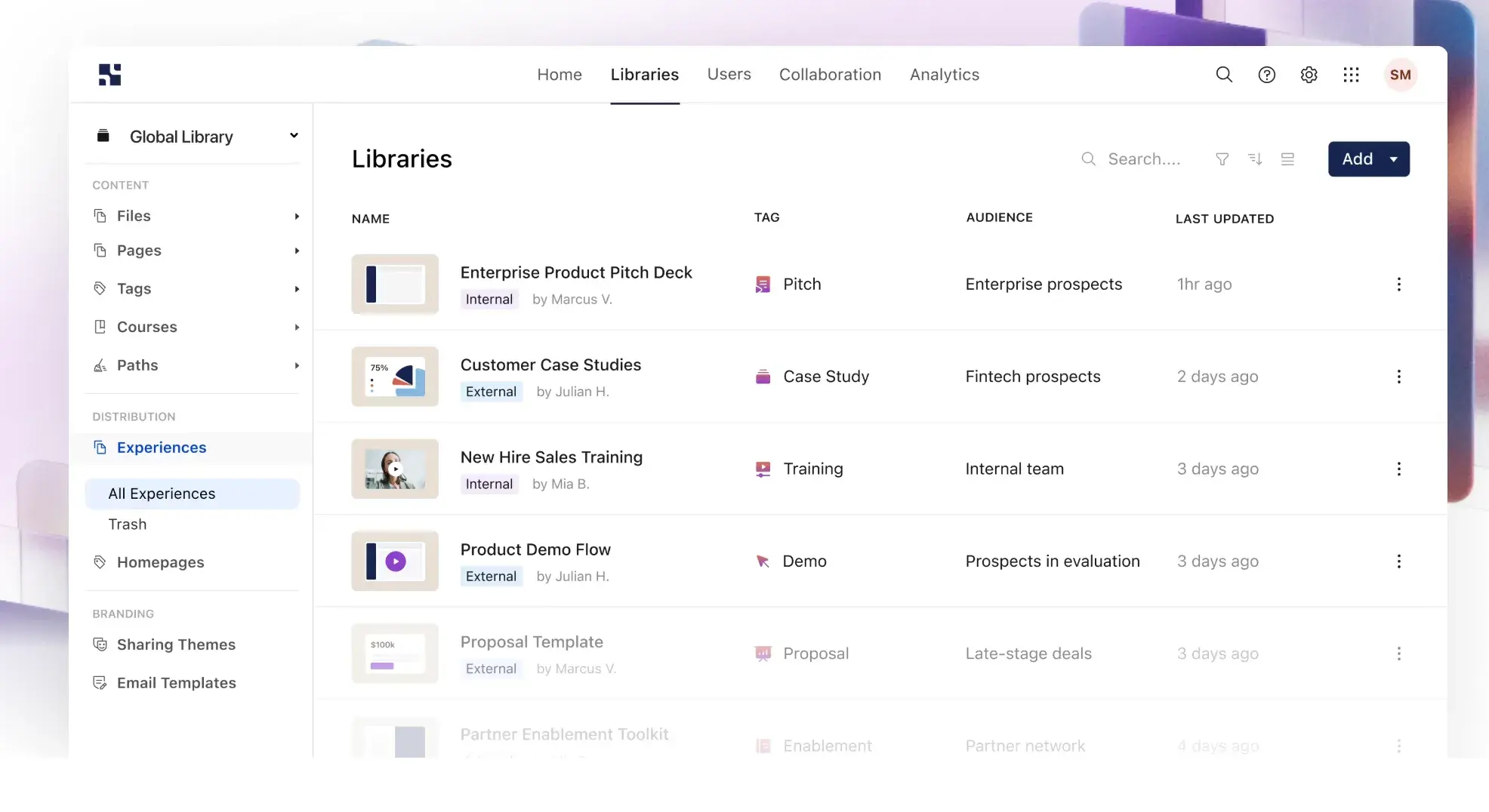
Source
Showpad bridges content management and sales coaching in a single platform. In October 2025, Vector Capital merged Showpad with Bigtincan (which had previously acquired Brainshark), combining content management, training, and coaching capabilities. In November 2025, Showpad was named a Leader in Gartner’s inaugural Magic Quadrant for Revenue Enablement Platforms.
Key Features
- Content hub with AI recommendations
- Training modules and practice scenarios
- Coaching scorecards
- MeetingIQ conversation analysis
- CRM integrations
Pricing: Custom pricing; generally positioned below Seismic and Highspot for mid-market buyers.
What I like: Showpad’s ability to connect content usage to coaching outcomes is a differentiator. Managers can see everything from which reps use approved content to where skill gaps line up with content adoption rates. Managers can see which reps are using approved content and where skill gaps correlate with content adoption gaps.
Best for: Mid-market teams combining content and coaching
Consideration: The Bigtincan integration is still underway. Prospective buyers should confirm which features are fully integrated and which are on the roadmap.
5. SalesHood
Source
SalesHood takes an AI-first approach to revenue enablement, combining content management with training, digital sales rooms, and mutual action plans. Unlike the legacy platforms above, SalesHood was built as a unified enablement system from the start rather than assembling capabilities through acquisition.
Key Features
- AI content audit to flag stale assets
- AI-powered pitch practice
- Digital sales rooms
- mutual action plans
- Huddles and Paths for internal training
- Salesforce and HubSpot integrations
Pricing: Starting at approximately $45/user/month.
What I like: SalesHood’s AI content audit feature automatically identifies stale or underused content and recommends updates, something that most platforms leave to manual review. For teams without a large enablement staff, this is a genuine time-saver.
Best for: Mid-market and growth-stage B2B sales teams that want content management, training, and deal rooms in one AI-native platform without enterprise complexity.
Frequently Asked Questions About Sales Content Management Platforms
How is a sales content management platform different from a CMS or DAM?
A general-purpose CMS (like WordPress or HubSpot’s Content Hub in its publishing role) is designed to create and manage website content (blog posts, landing pages, and web experiences). A DAM (digital asset management) tool stores and organizes brand media files like images, videos, and design assets for creative teams.
A sales content management platform sits between a CMS, a DAM, and the CRM: it governs, distributes, and tracks sales-facing materials specifically, with features like deal-stage recommendations, approval workflows, and content-to-revenue attribution that neither a CMS nor a DAM provides.
Some organizations use all three. The CMS manages web content, the DAM manages brand assets, and the sales CMS manages the materials that sellers share with buyers: battle cards, case studies, proposals, and pricing sheets. The key differentiator is that a sales content management system connects content engagement directly to sales outcomes.
Which content management software do sales teams use the most?
The enterprise market has been dominated by Seismic, Highspot, and Showpad, though all three are currently navigating major mergers. HubSpot’s combined Content Hub and Sales Hub has gained significant traction among mid-market and growth-stage teams because the content management and CRM functions share a single platform, eliminating integration complexity.
According to the 2025 Sales Enablement Landscape Report, enablement increasingly reports to RevOps (39.4% of organizations), which favors platforms that natively connect content analytics to pipeline data.
How long does migration usually take?
Migration timelines vary by platform complexity, content volume, and integration requirements. Lightweight platforms like HubSpot or SalesHood can be operational within one to three weeks for teams migrating from shared drives or basic file storage.
Enterprise platforms like Seismic often require four or more months for full implementation, particularly when customization, data migration, and CRM integrations are involved. The biggest variable is the content audit. Teams that clean and organize their library before migration deploy faster and see higher adoption.
What governance roles are required to keep content current?
Effective content governance requires at least four roles:
- Content owners (typically product marketing or enablement) are responsible for creating and updating assets.
- Approvers (often legal, compliance, or senior marketing), who sign off before publication.
- Compliance reviewers, who ensure materials meet regulatory or brand standards.
- Enablement admins who manage platform permissions, expiration rules, and reporting.
In smaller organizations, a single person may fill multiple roles, but the functions themselves should remain distinct to prevent bottlenecks and accountability gaps.
How do I connect content analytics to deals and revenue?
The connection between content analytics and revenue depends on CRM integration depth. Platforms that log content engagement events (opens, views, time spent, shares) directly to CRM deal records create an attribution chain from content to pipeline. Sales teams can then filter reporting by deal stage, content type, and outcome to identify which assets influence revenue.
HubSpot’s native architecture makes the connection between content analytics and revenue seamless because content activity, email engagement, and deal data live in the same database. Third-party platforms achieve this through CRM integrations, though sync latency and data mapping can introduce gaps.
The platform is the strategy.
A sales content management platform is the system that determines whether content investment translates into pipeline impact. The strongest platforms in 2026 centralize content governance, connect engagement analytics to CRM-tracked revenue, and use AI to improve both findability and personalization. With the enterprise enablement market consolidating rapidly, the choice of platform also carries long-term implications for product stability and roadmap continuity.
HubSpot’s Content Hub, Sales Hub, and Smart CRM together deliver the most integrated approach: content creation, seller distribution, engagement tracking, and revenue attribution on a single data layer, with AI through Breeze embedded throughout. For teams that want CRM-native content management without syncing separate systems, it’s the most efficient path to measurable results.
My take: After years of working across different sales tech stacks, the lesson I keep relearning is that tools only work when sellers actually use them. The best content management platform is the one that fits naturally into the daily workflow. In my experience, even significant enablement investments will inevitably gather dust when the platform lives outside the CRM. And I’ve seen lean teams punch well above their weight because their content, outreach, and deal data all lived in one place.
If your team is evaluating platforms right now, start with the workflow your sellers already follow, and choose the platform that strengthens it without adding friction.


 English (United States)
  Chinese